In today’s rapidly expanding digital age, the internet is no longer just a carrier of information—it has become the lifeline of brands, creators, and businesses. Whether it’s a tech blog, an online store, a media platform, or a personal portfolio, a stable, fast, and secure hosting platform is the foundation of any online presence.
However, with hundreds of hosting providers available today, choosing the right platform is often more complicated than building the website itself. Should you prioritize performance, pricing, or customer support? After trying various hosting solutions, I’ve come to realize that the essence of good hosting is not about how “big” the cloud is, but whether it allows your website to grow freely, efficiently, and securely.
1. From Shared to Cloud: The Evolution of Hosting Technology
In the early days of the internet, hosting was an extremely expensive resource. Companies that wanted a website running 24/7 had to purchase physical servers, maintain data centers, and manage power and bandwidth—an impossible task for most small teams.
Shared hosting became the most common solution at the time—dozens or even hundreds of websites shared the same server resources. It was cheap, but the trade-off was poor performance, limited security, and almost no scalability.
Later, VPS (Virtual Private Server) hosting emerged as a middle-ground option. It offered an “independent environment” within a shared server through virtualization, giving users their own operating system, custom software installations, and firewall settings. This made hosting more controllable and efficient.
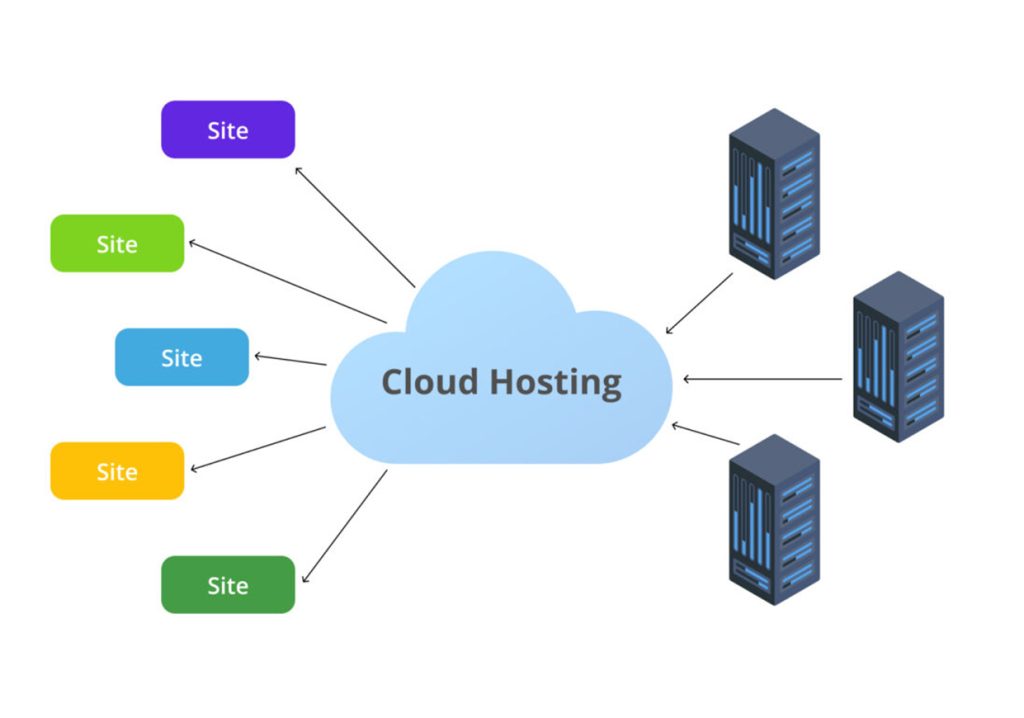
Eventually, cloud hosting completely changed the landscape. Resources were no longer tied to a single physical server but distributed across multiple nodes worldwide. Even if one node failed, websites continued to run smoothly. Today, “the cloud” has become synonymous with modern hosting—but the real difference lies in the technology, service, and user experience behind it.
2. Speed, Security, and Scalability: The Three Pillars of Hosting
A good hosting provider must excel in three key areas:
1. Speed
Website loading speed directly affects user experience and SEO ranking. Studies show that if a site takes longer than three seconds to load, over 40% of visitors will leave. A reliable host should offer optimized caching, SSD storage, and global CDN acceleration.
2. Security
Cyberattacks, data breaches, and DDoS incidents have become commonplace. Security is not just about defense—it’s about prevention and recovery. Firewalls, daily backups, automated restoration, and SSL encryption are essential metrics for evaluating a hosting provider’s reliability.
3. Scalability
As website traffic and features grow, so do resource demands. An ideal hosting platform allows users to upgrade resources flexibly or migrate to higher configurations seamlessly—without downtime.

3. From a User’s Perspective: What I Truly Need from Hosting
After years of building and testing websites, I’ve realized that great hosting isn’t about speed or price—it’s about systems that save time and reduce risk.
Here’s what I look for in a hosting platform:
- No need to be a system administrator – one-click deployment, automatic updates, and easy management of SSL and backups.
- Visual control panel – clear visibility of CPU, bandwidth, and storage usage.
- Support for WordPress and custom frameworks – smooth operation whether it’s a content site or an API service.
- Responsive support team – no endless waiting or chatbot loops when issues arise.
Surprisingly, very few hosting companies meet all these expectations. Last year, I discovered ScalaHosting—a provider known for its innovative VPS and cloud hosting technology—and it completely reshaped how I view web hosting.
4. ScalaHosting: Making Hosting Smarter and More Personalized
Founded in 2007, ScalaHosting may not rely on massive ad campaigns like some “industry giants,” but it has earned a strong reputation among developers and professionals for its stability and innovation. What impressed me most was its balance between self-developed technology and user control.
1. SPanel: A Smart Alternative to cPanel
Many users find cPanel complicated and costly. ScalaHosting developed SPanel, a fully compatible yet license-free alternative.
Lightweight and efficient, it integrates all key tools—email, databases, DNS, SSL, backups, and file management—under one dashboard. For small teams, it can reduce operating costs by up to 30%.
2. SShield: Real-Time AI Security Protection
Another standout feature is SShield, an AI-driven real-time security system that monitors files and traffic continuously. It blocks malicious activity instantly, detecting over 99.98% of threats within 0.1 seconds, ensuring stability even in high-risk industries.
3. Customizable VPS Plans
Unlike traditional fixed packages, ScalaHosting lets users customize VPS configurations—CPU cores, RAM, and SSD capacity—based on specific needs.
This flexibility means you only pay for what you use, achieving maximum efficiency and cost control.
4. Free Migration and 24/7 Support
ScalaHosting offers free website migration, with its tech team handling all files, databases, and SSL installations. Their 24/7 live support is remarkably responsive—most issues are resolved within minutes, an invaluable asset for content-driven sites.
5. My Experience: From Migration to Long-Term Stability
I migrated one of my WordPress-based tech sites to ScalaHosting, and their team handled the entire process—from file transfer to SSL setup—in less than 30 minutes.
The results were immediate:
- Page load time dropped from 3.5 seconds to 1.2 seconds.
- The admin dashboard became noticeably faster.
- Security scans reported zero malware or vulnerabilities.
- No downtime recorded over an entire year.
What I particularly love is the intuitive SPanel interface. From the dashboard, I can monitor visitor data, CPU usage, and bandwidth in real-time, and schedule automatic backups.
It’s a seamless experience that lets me focus on content creation rather than server maintenance.
6. Pricing and Value: Not Cheap, But a Smart Investment
Many people choose hosts based solely on low prices, but true value lies in long-term efficiency. ScalaHosting’s pricing is fair—entry-level VPS plans start at under $20/month, including SPanel, SShield, daily backups, SSL, and migration.
There are no extra license fees or hidden plugin costs.
For small businesses, independent developers, and creators, this all-inclusive model is both practical and cost-effective. ScalaHosting also supports monthly, quarterly, or annual billing, making it easy to match your budget.
7. The Cloud Hosting Mindset: Choosing a Platform That Thinks for You
The hosting industry is evolving into a new era—where intelligence, automation, and security converge.
In the past, a host was merely a place to store files. Now, it acts as a tech partner that understands you.
It automatically detects unusual traffic, optimizes resource distribution, and even predicts load spikes before they happen.
ScalaHosting exemplifies this new generation of hosting philosophy.
By combining the flexibility of VPS with the reliability of cloud hosting—and leveraging AI and automation—it helps users achieve a faster, safer, and more economical web environment.
8. Hosting Is Not Just Space—It’s Trust
A reliable hosting provider is not just a data warehouse; it’s the foundation of your website’s growth. It ensures your updates run smoothly, keeps your brand always online, and allows your work to reach the right audience.
Among countless hosting options, ScalaHosting stands out with its stable, secure, and intelligent services, proving that advanced technology doesn’t have to be complicated—and great experiences can be effortless.
For anyone seeking faster performance, stronger security, and long-term reliability, ScalaHosting is undoubtedly a trustworthy choice.
In this cloud-driven era, hosting is no longer about cold servers—it’s about empowering creators and businesses with freedom. Finding the right platform may well be the most important first step in your digital journey.